
Dual Blade Lifters Deliver 80m Blades to Sanquhar II Wind Farm
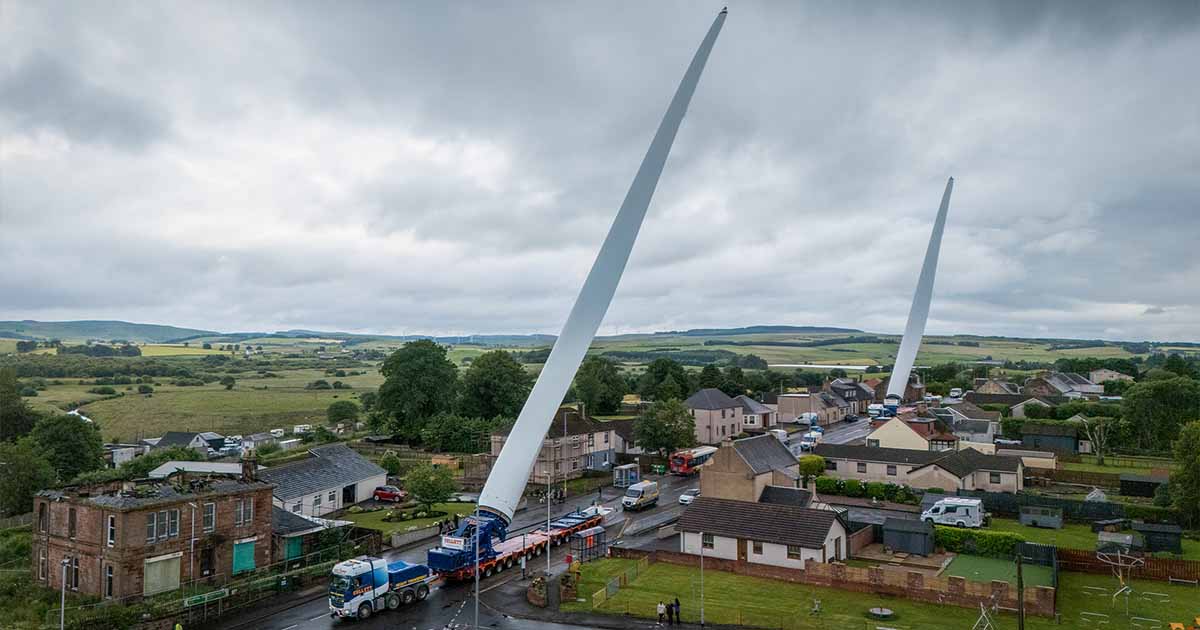
Collett have successfully completed the UK’s first dual blade lifter convoy operation for Sanquhar II Wind Farm, delivering abnormal load wind turbine components through challenging access routes using our new Goldhofer blade lifter alongside our existing Scheuerle blade lifter.
The operation marked the first project deployment of our new Goldhofer blade lifter, which forms part of our continued investment in specialist transport equipment. Working alongside our existing Scheuerle blade lifter, both units were deployed in convoy to support deliveries for one of the UK’s largest onshore wind farm developments currently under construction.
Once complete, we will have delivered 480 wind turbine components for the 44-turbine project, including 42 Vestas V162 turbines fitted with 80-metre blades and two V136 turbines fitted with 68-metre blades. Alongside the blades, deliveries include tower sections, nacelles, hubs and power trains, with the project programme continuing through to completion in 2027.
Blade transfer and preparation
The turbine blades were initially loaded at King George V Dock in Glasgow before being transported using our quadruple extendable blade trailers to a designated transition point approximately 10 miles from the wind farm site. At this location, the blades were unloaded using our Kalmar reach stackers fitted with specialist lifting hooks before being transferred onto the blade lifter trailers for the onward heavy transport phase.
The use of our specialist lifting equipment removed the requirement for a mobile crane during the transfer process, improving efficiency and reducing additional site logistics requirements.
The final delivery phase required the blades to be transported through narrow villages, tight bends and restricted sections of road where conventional heavy transport solutions would not have been suitable. By lifting blades to angles of up to 60 degrees, our blade lifters provided the additional manoeuvrability required to safely navigate these constraints while maintaining control, stability and clearance throughout the journey.
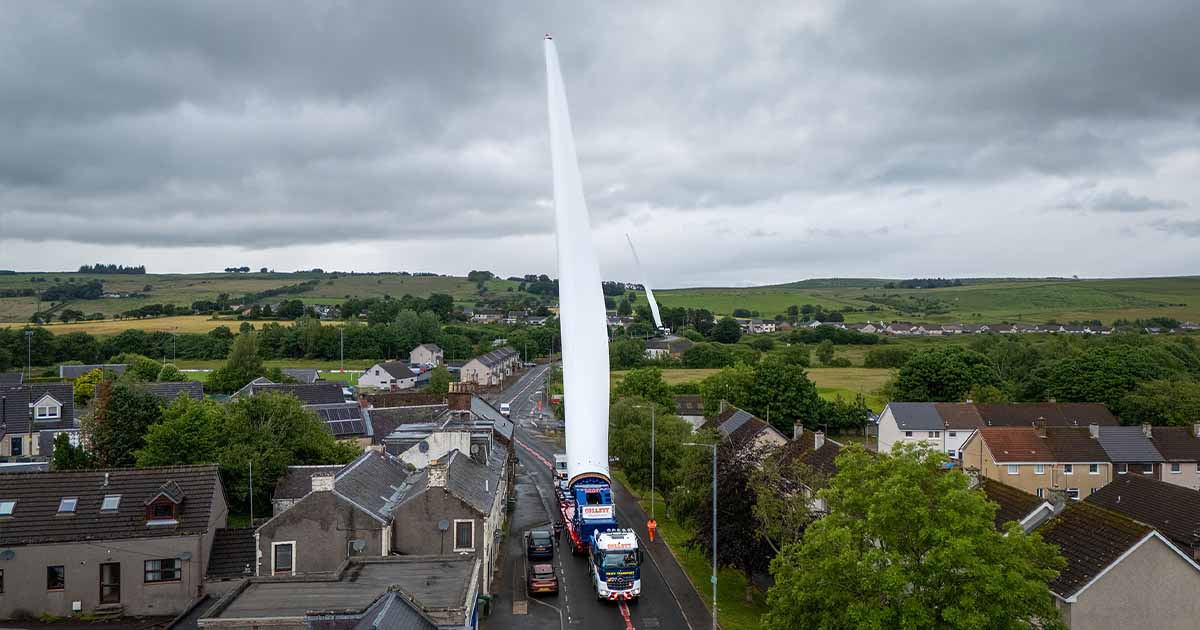
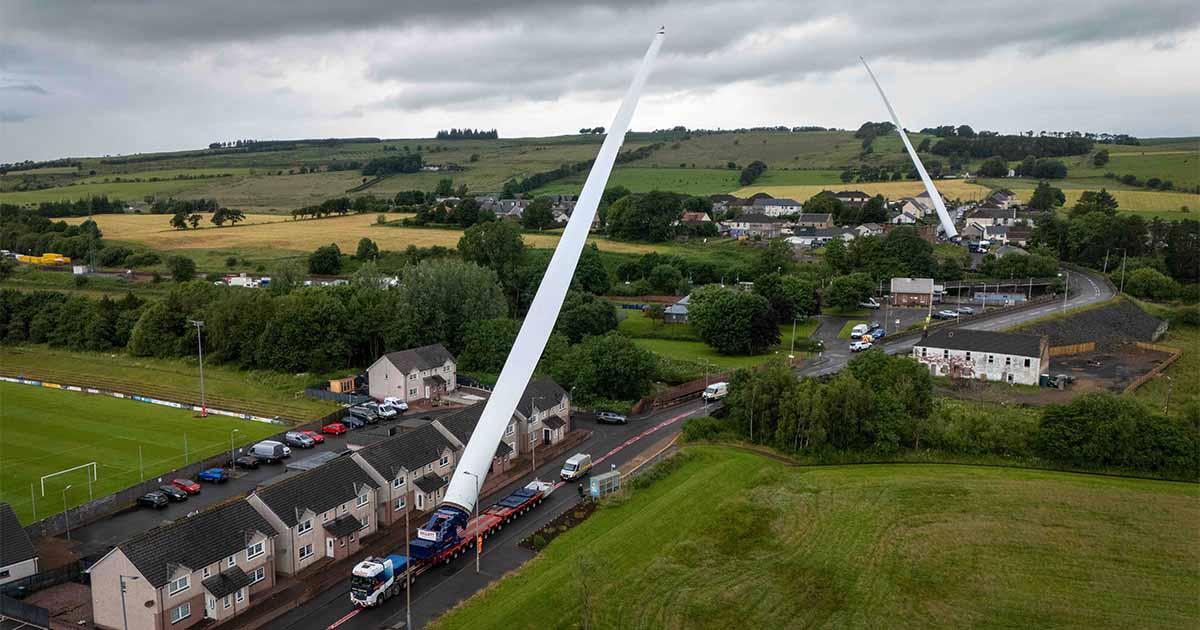
The dual blade lifter convoy consisted of two specialist trailers operating simultaneously, supported by dedicated six-person crews. This required a total of 12 specialist operators to manage the complex abnormal load movement.
Before mobilisation, our Consulting department carried out detailed route surveys and swept path analysis to assess the abnormal load route, confirm feasibility and identify any infrastructure modifications or mitigation measures required to facilitate delivery.
This detailed planning process allowed the delivery route to be assessed in advance, ensuring the 80-metre turbine blades could be transported safely through the most challenging sections of the route.
Our specialist transport capability combines detailed engineering, route planning and a diverse fleet of purpose-built equipment, including blade lifters and modular trailer systems, allowing us to develop tailored solutions for complex oversized and abnormal load movements.
Expanding specialist transport capability
The turbine blades were initially loaded at King George V Dock in Glasgow before being transported using our quadruple extendable blade trailers to a designated transition point approximately 10 miles from the wind farm site. At this location, the blades were unloaded using our Kalmar reach stackers fitted with specialist lifting hooks before being transferred onto the blade lifter trailers for the onward heavy transport phase.
The use of our specialist lifting equipment removed the requirement for a mobile crane during the transfer process, improving efficiency and reducing additional site logistics requirements. The final delivery phase required the blades to be transported through narrow villages, tight bends and restricted sections of road where conventional heavy transport solutions would not have been suitable. By lifting blades to angles of up to 60 degrees, our blade lifters provided the additional manoeuvrability required to safely navigate these constraints while maintaining control, stability and clearance throughout the journey.
The dual blade lifter convoy consisted of two specialist trailers operating simultaneously, supported by dedicated six-person crews. This required a total of 12 specialist operators to manage the complex abnormal load movement.
Paul Worth, Senior Project Manager at Collett, said:
“The introduction of a second blade lifter has enabled us to increase blade delivery capacity during this phase of the project while maintaining the established transport methodology. Every movement still follows the same detailed planning process and operational controls required to transport blades of this size through a constrained route.”
Rod Wood, Managing Director of CWP Energy, added:
“Sanquhar II is a major onshore wind project, and its successful delivery depends on careful planning and close collaboration between all parties involved. The use of two blade lifters operating together has helped improve the efficiency of component deliveries while managing the logistical challenges associated with transporting large turbine blades to site. We’re pleased to be working with Collett and look forward to continuing to make good progress as construction advances.”