
131 Tonne Shunt Reactor Beach Landing at Black Rock Sands
Collett has successfully completed a complex transport and installation project, delivering a 131 Tonne shunt reactor to National Grid’s Trawsfynydd Substation via a beach landing at Black Rock Sands.
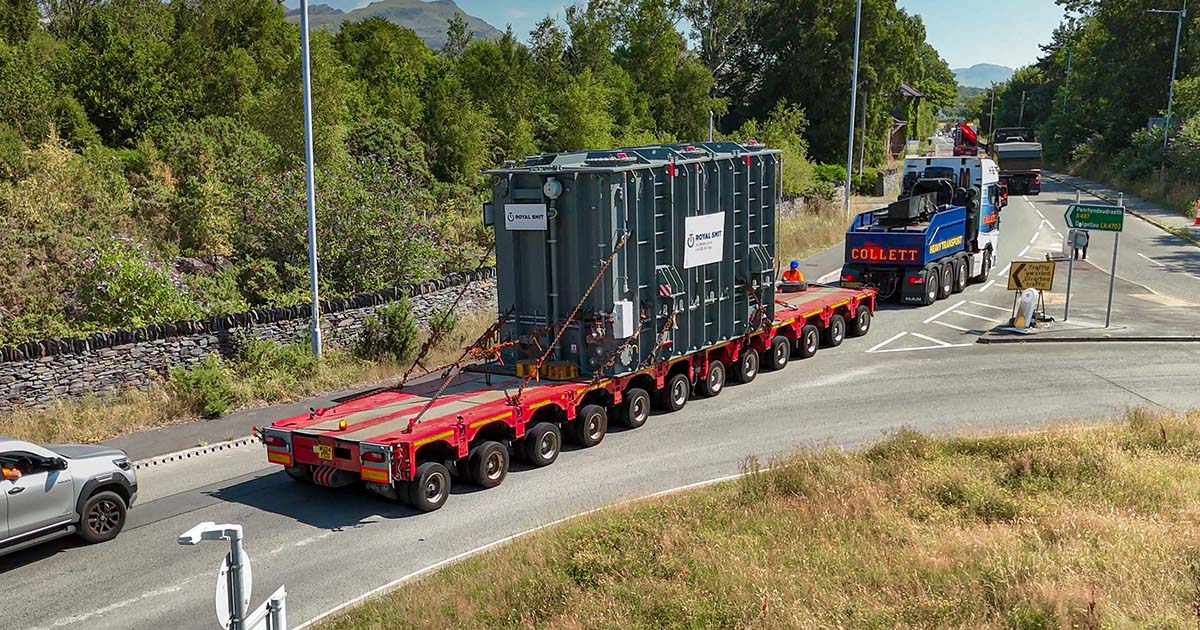
Working on behalf of Royal SMIT B.V., Collett delivered a technically demanding project combining marine logistics, a beach landing operation, abnormal load transport and installation. Measuring 7.2m L x 4.2m W and 3.9m H, the shunt reactor was transported on a 12-row modular drawbar trailer.
Due to significant inland route constraints, our team identified Black Rock Sands as the most suitable access point for the delivery, developing a beach landing solution that enabled the shunt reactor to bypass a conventional inland route before continuing to Trawsfynydd Substation.
Engineering the Beach Landing Challenge
The project began with receiving the shunt reactor at the Port of Rotterdam, loading directly onto our trailer positioned within the Terra Marique operated by Wynns & Sons. Once secured for the return voyage, the sea vessel sailed back to reach the Welsh coast in line with the project schedule.
The primary challenge came at Black Rock Sands, where the complete discharge of the vessel had to be achieved within a restricted 12-hour tidal window. With the available working time dictated by the tide, every stage of the operation required careful coordination between all teams.
As the tide receded, approximately 290 metres of temporary trackway was installed along the beach by TPA Roadway Solutions, with our crane vehicle constructing a purpose-built ramp between the vessel’s tail lift and the trackway to accommodate the suspension tolerances of the modular trailer during the offload.
Completing the beach landing operation, the 131 Tonne shunt reactor was driven from the vessel, up the beach and positioned above the high-water mark. With the cargo safely clear of the tidal zone, the temporary ramp and trackway were recovered ahead of the returning tide, completing the beach landing within the available working window.
From Shoreline to Substation
Following completion of the beach landing, the shunt reactor continued under North Wales Police escort along a pre-assessed route to Trawsfynydd Substation. Route assessments undertaken during the planning phase identified the required tree pruning to provide sufficient clearance for the abnormal load and overcame rural roads and steep inclines.
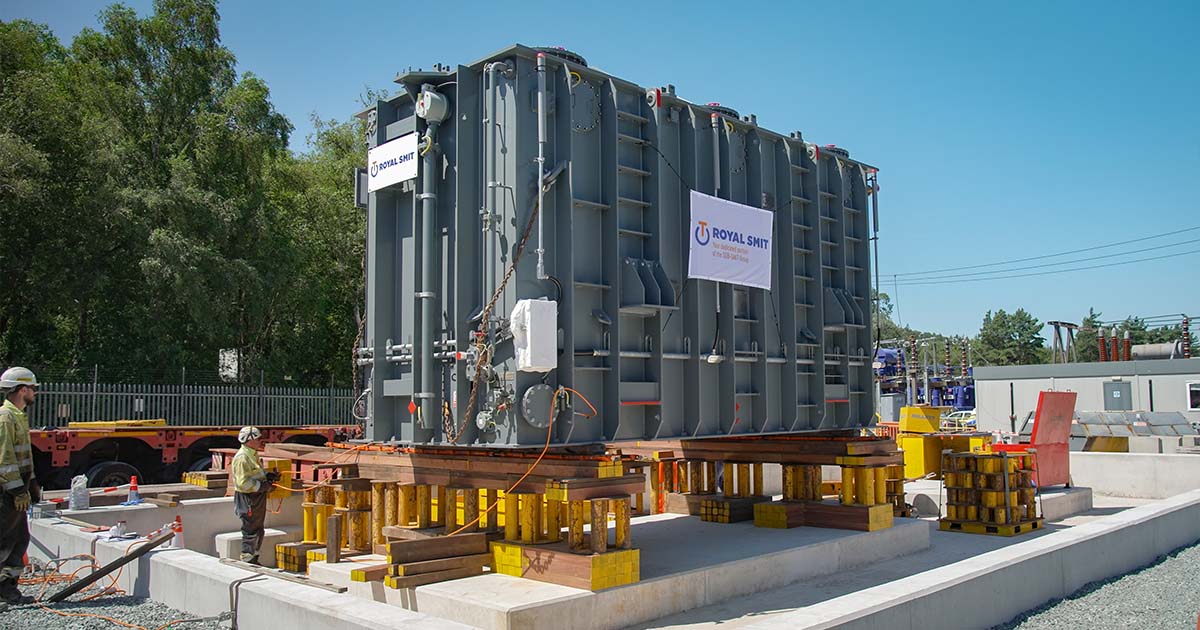
Ahead of the delivery arriving on site, our Heavy Lift team constructed a 12-metre skid track to facilitate the final installation. Using hydraulic jacks, the shunt reactor was transhipped from the modular trailer onto the skid track. Due to the bund wall being non load-bearing, steel beams were installed to safely bridge the obstruction and distribute the load before the unit was jacked down on to the plinth following on to final positioning.
Alongside the main unit installation, Collett also managed the transport and installation of the associated cooler bank accessories. Following collection from the Port of Rotterdam and transhipment through our Goole depot, the equipment was delivered to Trawsfynydd Substation where a 90 Tonne mobile crane completed the offloading and installation.
Throughout the substation works, our Engineering Department developed the lifting, skidding and load-spreading methodologies to ensure all operations complied with the site’s maximum permissible ground bearing pressure restrictions.
Bringing together multiple specialist disciplines, the project combined marine transport, tidal planning, abnormal load logistics and heavy lift installation within a single coordinated operation. Through careful planning and engineering, our team successfully delivered the shunt reactor to its final position at Trawsfynydd Substation.